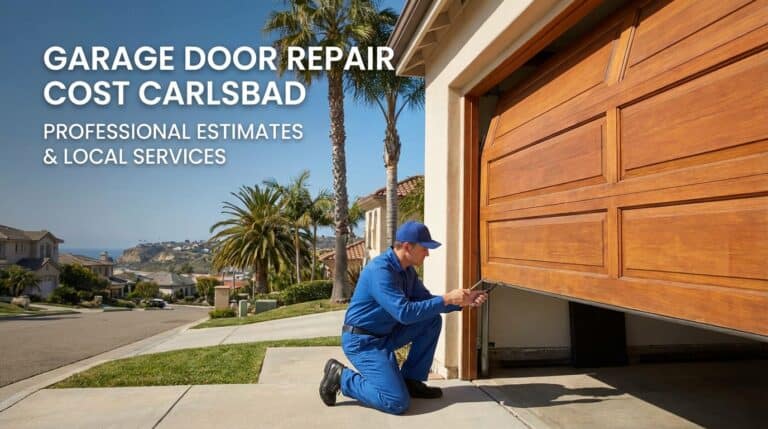
Garage Door Maintenance Tips: Essential Guide for Homeowners to Ensure Smooth Operation and System Reliability
Your garage door represents one of the largest moving mechanical components in your home, operating multiple times daily while protecting your vehicles and possessions. Despite this critical role, many homeowners overlook proper maintenance until a malfunction occurs, often resulting in costly repairs and safety hazards. As a professional with years of experience in residential garage door care, I’ve witnessed firsthand how a consistent maintenance routine can extend door lifespan by decades while preventing unexpected breakdowns.
Understanding the fundamentals of overhead door upkeep empowers you to maintain optimal door functionality while identifying potential issues before they escalate. This comprehensive guide provides actionable garage door maintenance tips that balance DIY maintenance capabilities with situations requiring professional technician intervention. By implementing these preventive maintenance strategies, you’ll enhance operational efficiency, reduce noise, and significantly improve the safety compliance of your automatic door system.
Torsion Spring and Extension Spring Systems Require Regular Inspection
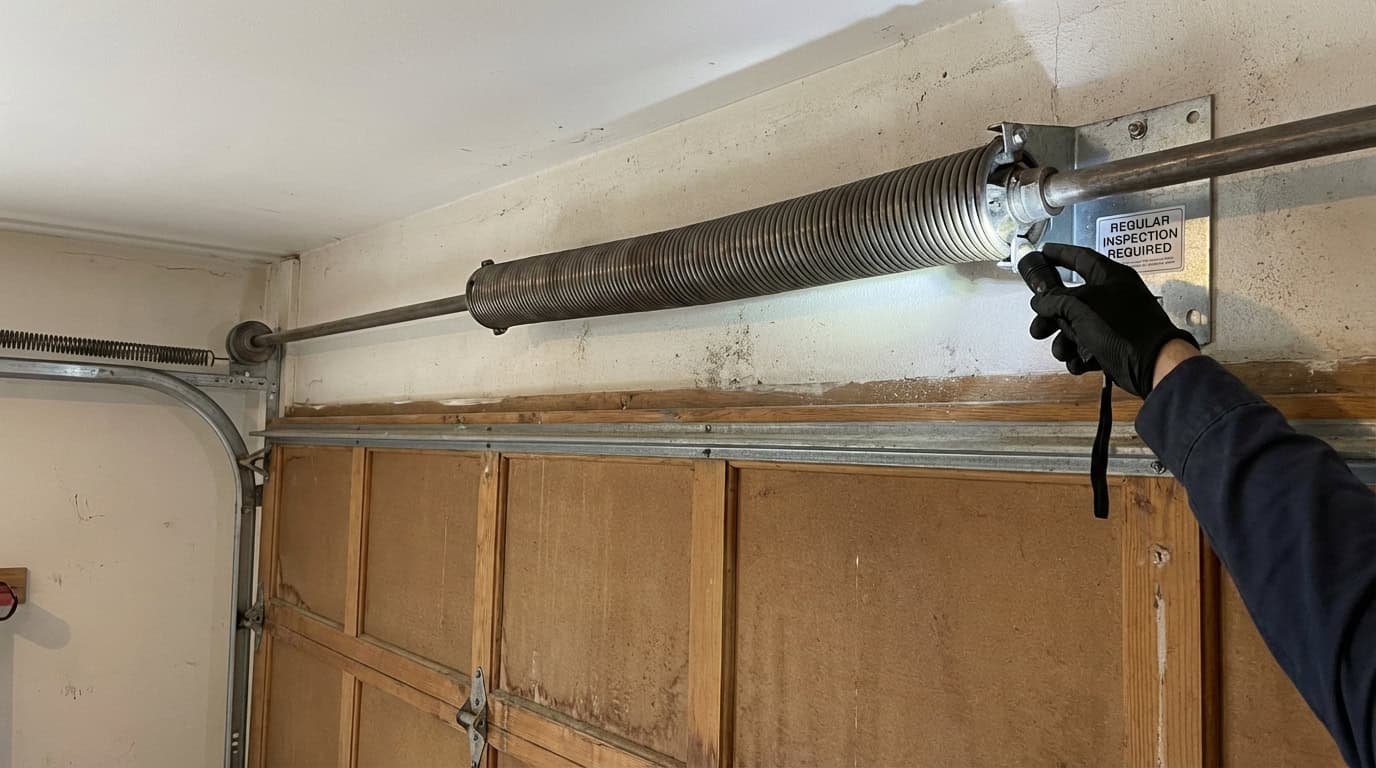
The spring assembly serves as the counterbalance system enabling your garage door to open and close smoothly despite weighing several hundred pounds. Torsion springs mount horizontally above the door opening, utilizing winding cones and a shaft to create stored energy, while extension springs stretch along the horizontal track on each side. These critical mechanical components endure tremendous spring tension with every operation cycle, making them susceptible to wear and eventual failure without proper monitoring.
Conducting a visual inspection monthly helps identify warning signs such as gaps between coils, rust accumulation, or visible damage to the bearing plate and drum assemblies. Never attempt spring adjustment or replacement yourself, as these components store dangerous amounts of potential energy capable of causing severe injury. If you notice uneven door movement, jerky operation, or hear loud noises during opening and closing, contact a garage door repair service immediately for professional spring maintenance and cable examination.
How Often Should You Perform a Door Balance Check?
Performing a balance test quarterly ensures your spring system maintains appropriate tension for safe, efficient operation. Disconnect the garage door opener by pulling the emergency cord, then manually lift the door halfway and release it. A properly balanced door should remain stationary or move minimally, while an imbalanced door will rapidly fall or rise, indicating spring tension issues requiring professional adjustment.
This simple yet effective test prevents excessive strain on your motor and extends component longevity throughout the entire system. Imbalanced doors force the opener to work harder, accelerating wear on the chain drive, belt drive, or screw drive mechanism depending on your configuration. Schedule annual service with a qualified technician who can precisely calibrate spring balance using specialized tools and safety equipment.
Garage Door Opener and Safety Sensors Demand Systematic Testing
Modern automatic garage door systems incorporate multiple safety features designed to prevent property damage and personal injury. The garage door opener contains force setting adjustments, automatic reverse mechanisms, and interfaces with photo-eye sensors that project an infrared beam across the door opening. Your opener’s circuit board, receiver, and antenna work together with the transmitter in your remote control to provide convenient, secure access while maintaining safety compliance.
Testing these safety sensors monthly ensures proper functioning when needed most. Place an object like a cardboard box in the door’s path and attempt to close it using your wall switch or remote. The door should immediately reverse upon detecting the obstruction. If the door continues closing, check sensor alignment by verifying both sensor lights illuminate steadily, clean any debris from the lenses, and ensure the infrared beam isn’t obstructed by cobwebs or mounting bracket misalignment.
What Maintenance Does Your Opener Motor Require?
Your opener motor requires minimal direct maintenance but benefits significantly from keeping connected components in optimal condition. Check that the power source delivers consistent voltage by testing the circuit breaker, examine the rail for straightness, and verify the trolley moves freely along its entire length. Chain drive systems need periodic lubrication with white lithium grease, while belt drive and screw drive configurations typically require only visual inspection for wear.
The manual release mechanism provides emergency access during power outages and should be tested biannually to ensure smooth engagement of manual mode. Replace batteries in your remote control and keypad annually before they fail, and consider upgrading to backup power systems if you depend on garage access during electrical disruptions. These simple opener maintenance steps prevent inconvenient failures and maintain the system’s reliability throughout seasonal temperature fluctuations.
Track Alignment and Roller Maintenance Ensure Quiet Operation
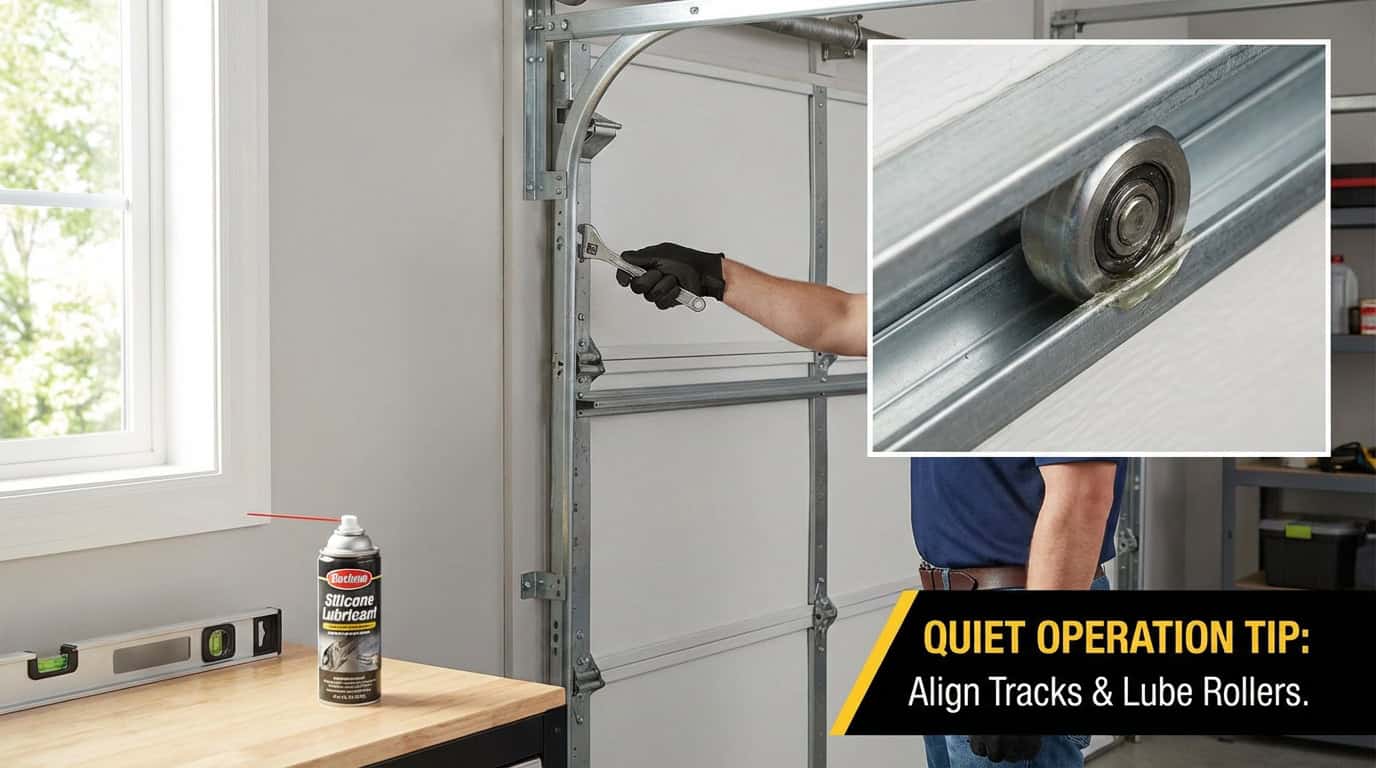
The vertical track and horizontal track guide your door through its complete travel path, while rollers mounted in hinges facilitate smooth movement along this pathway. Over time, debris accumulation, hardware loosening, and normal wear affect track alignment and roller performance, resulting in noisy operation, increased friction, and uneven door movement. Cleaning tracks quarterly removes dirt, grease buildup, and small objects that impede roller travel.
Inspect each roller for signs of wear, including cracks in rubber wheels or wobbling in steel rollers, and check that they rotate freely within their bearings. Curved track sections connecting vertical and horizontal segments require particular attention, as these transition areas experience the greatest stress. Examine mounting brackets and bolts for tightness, as vibration gradually loosens hardware connections throughout the system, potentially causing the door to bind or become stuck mid-cycle.
Which Lubricant Works Best for Moving Parts?
Selecting appropriate lubricants protects moving parts while reducing noise and preventing wear. Apply silicone spray to weatherstripping and bottom seal components to maintain flexibility without attracting dirt. White lithium grease provides excellent protection for hinges, rollers, and pulleys, creating a lasting barrier against moisture and friction. Avoid using WD-40 as a lubricant, since it functions primarily as a penetrating solvent that evaporates quickly, leaving components unprotected.
Implement garage door lubrication as part of your seasonal maintenance routine, targeting all moving metal components during spring and fall. Wipe away excess lubricant to prevent drip marks and dust accumulation. This simple step significantly extends component longevity while eliminating squeaks and reducing the operational noise that often disturbs household activities, particularly in homes with living spaces above or adjacent to the garage.
Weatherstripping and Door Panels Protect Against Elements
The weatherstripping around your door frame and the bottom seal create crucial barriers against drafts, moisture, precipitation, and pests while contributing to energy efficiency through improved insulation. Inspect these seals during each seasonal transition, checking for cracks, brittleness, compression damage, or gaps that compromise their effectiveness. Door panels themselves require examination for dents, rust on steel doors, rot on wood doors, or separation in aluminum door construction.
Weather seal replacement represents one of the most cost-effective improvements for preventing drafts and maintaining comfortable garage temperatures. Consider the R-value of your insulation when evaluating overall door performance, particularly if you utilize garage space as a workshop or have living areas above. Addressing damaged panels promptly prevents further deterioration and maintains the aesthetic appeal that contributes to your property’s curb value.
How Do You Maintain Different Door Materials?
Each door material requires specific maintenance approaches for optimal longevity. Steel doors benefit from annual rust removal using wire brushes and paint touch-up to seal exposed metal. Wood doors demand the most attention, requiring regular inspection for moisture damage, repainting or staining every few years, and careful monitoring of panel joints. Aluminum doors resist corrosion naturally but may develop dents requiring professional repair to maintain structural integrity and appearance.
Regardless of material, washing door surfaces twice annually with mild detergent removes corrosive substances like road salt and environmental pollutants. Pay special attention to bottom sections that contact ground moisture and splash-back. This routine care prevents premature degradation while allowing you to identify developing issues during your inspection process, ensuring comprehensive door care across all components.
Monthly Maintenance Routine and Professional Service Balance
Establishing a consistent monthly maintenance routine creates accountability while systematically addressing all critical components. Your checklist should include visual inspection of all visible hardware, testing the automatic reverse feature, checking sensor alignment, listening for unusual noises during operation, and observing door balance during manual operation. These quick checks, requiring approximately 15 minutes, identify most developing problems before they cause system failure or safety hazards.
Document your maintenance activities and observations, noting any changes in door operation or component condition. This record helps professional technicians diagnose issues more efficiently during annual service calls and provides evidence of proper care if warranty claims become necessary. Combining diligent DIY maintenance with annual professional inspection creates the optimal approach for maximizing door lifespan while maintaining safety and operational efficiency.
When Should You Call a Garage Door Repair Service?
Understanding your limitations prevents dangerous DIY repairs and ensures quality workmanship on complex issues. Immediately contact a professional technician for broken springs, frayed cables, significant track damage, opener motor failures, and any situation involving the high-tension components connected to the winding cone and shaft assembly. These repairs require specialized tools, training, and safety equipment beyond typical homeowner capabilities, and attempting them risks serious injury.
Additionally, seek professional service when troubleshooting issues reveal problems beyond simple adjustments, when doors exhibit persistent operational problems despite your maintenance efforts, or when you lack confidence in properly diagnosing performance issues. The cost savings from preventing major failures through professional intervention far exceed the expense of annual service visits, making this investment in expert evaluation a financially sound decision for any homeowner.
| Maintenance Task | Frequency | Skill Level | Estimated Time |
|---|---|---|---|
| Visual inspection and cleaning | Monthly | Beginner | 15 minutes |
| Lubrication of moving parts | Quarterly | Beginner | 20 minutes |
| Safety sensor testing | Monthly | Beginner | 5 minutes |
| Balance test and adjustment | Quarterly | Intermediate | 10 minutes |
| Hardware tightening | Semi-annually | Intermediate | 30 minutes |
| Weather seal replacement | As needed (2-5 years) | Intermediate | 45 minutes |
| Professional comprehensive service | Annually | Professional | 60-90 minutes |
Essential Tools and Safety Precautions for Homeowner Maintenance

Proper tools ensure effective maintenance while minimizing safety risks during routine care activities. Your basic garage door maintenance kit should include adjustable wrenches for hardware tightening, a level for checking track alignment, cleaning supplies for removing debris, appropriate lubricants including silicone spray and white lithium grease, and a sturdy ladder for accessing upper components. Avoid improvising with inadequate tools that may slip, strip fasteners, or fail under load.
Always prioritize safety precautions during any maintenance activity. Disconnect the power source before performing work near the opener’s electrical components, never place hands or fingers between door panels or near pinch points, wear safety glasses when working overhead, and ensure adequate lighting throughout your workspace. Remember that garage doors operate under extreme tension even when appearing stationary, making respect for the system’s mechanical power essential for injury prevention.
What Common Mistakes Should You Avoid?
Many homeowners inadvertently damage their garage door systems through well-intentioned but misguided maintenance attempts. Never apply lubricant to tracks themselves, as this creates a slip hazard for rollers and attracts debris that impedes smooth operation. Avoid over-tightening bolts and nuts, which can strip threads or crack components, and resist the temptation to adjust spring tension without proper training and safety equipment.
Additionally, don’t ignore minor issues hoping they’ll resolve independently, as small problems invariably worsen over time, often causing secondary damage to related components. Maintain realistic expectations about DIY capabilities, recognizing that some repairs genuinely require professional expertise despite online tutorials suggesting otherwise. These common maintenance mistakes account for numerous preventable failures and dangerous situations that proper education and restraint could have avoided entirely.
Frequently Asked Questions
How often should I lubricate my garage door?
Lubricate all moving parts including rollers, hinges, pulleys, and springs every three to four months, with additional applications before winter and after summer to address seasonal temperature effects. Use white lithium grease for metal components and silicone spray for weather seals. This routine prevents friction-related wear, reduces operational noise, and extends component longevity significantly.
Can I replace garage door springs myself?
No, spring replacement should always be performed by professional technicians due to extreme safety risks. Torsion springs and extension springs store tremendous energy under tension, and improper handling can cause severe injuries or death. Professional garage door repair services possess specialized tools, safety equipment, and training necessary to safely remove and install springs while ensuring proper tension calibration.
Why does my garage door reverse immediately after touching the floor?
This issue typically indicates incorrect force setting adjustment on your garage door opener or problems with the limit switch configuration. The opener interprets floor contact as excessive resistance, triggering the automatic reverse safety feature. Consult your opener manual for force adjustment procedures, or contact a professional technician if adjustments don’t resolve the issue, as improper settings compromise both functionality and safety.
How long should a properly maintained garage door last?
With consistent preventive maintenance, quality garage doors typically last 15-30 years depending on material, usage frequency, and environmental conditions. Steel doors generally last 20-25 years, wood doors require more maintenance but can last 20+ years with proper care, and aluminum doors typically provide 20-30 years of service. Regular lubrication, prompt repairs, and annual professional inspections maximize door lifespan across all materials.
What causes garage door cables to break?
Cable failure results from normal wear over time, rust and corrosion from moisture exposure, improper cable tension, or sudden shock from broken springs. Frayed cables with visible wire separation indicate imminent failure and require immediate professional attention. Regular cable examination during monthly inspections allows early detection of deterioration, preventing dangerous failures that can cause rapid, uncontrolled door descent.
Should I insulate my garage door?
Insulating your garage door significantly improves energy efficiency if you have living spaces above the garage, use the space as a workshop, or experience extreme temperatures. Insulated doors with higher R-values reduce heating and cooling costs, minimize temperature transfer, decrease noise transmission, and add structural rigidity. Consider professional installation of insulation kits or replacement with factory-insulated doors for optimal performance and proper weight balance.