
Garage Door Repair Service
Repairs | New Doors | Openers | Parts & Accessories
Garage Door Repair Service : Professional Solutions for Residential and Commercial Door Systems
Garage doors represent one of the most frequently used mechanical systems in residential and commercial properties, cycling thousands of times annually. When these essential systems malfunction, understanding the complexities of garage door repair becomes critical for property owners. Professional garage door service encompasses a comprehensive range of solutions, from minor adjustments to complete component replacement, ensuring optimal functionality, safety, and security. This article examines the critical aspects of garage door maintenance, common malfunctions, repair procedures, and the importance of professional service providers in maintaining these vital access systems.
Garage Door Components and Their Essential Functions
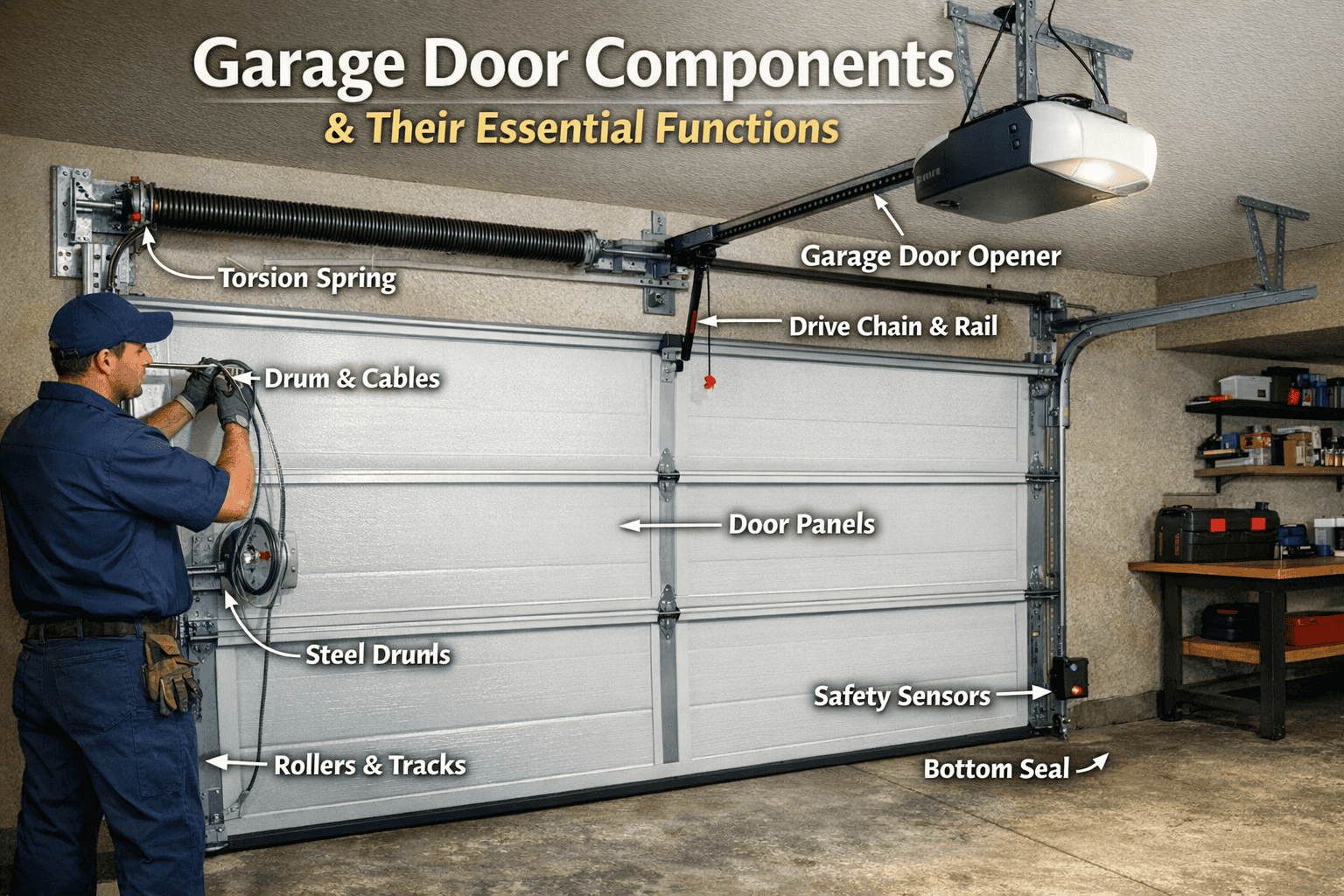
Understanding the anatomy of garage door systems provides essential context for comprehending repair requirements. Modern garage doors comprise numerous interconnected components, each serving specific mechanical and safety functions. The primary structural elements include garage door panels, which form the door’s visible surface, and garage door tracks that guide vertical and horizontal movement. Garage door rollers facilitate smooth operation along these tracks, while garage door hinges connect individual panels, allowing controlled articulation during opening and closing cycles.
The counterbalance system represents the most critical mechanical component, utilizing either torsion springs or extension springs to offset the door’s substantial weight. A torsion spring mounts horizontally above the door opening, utilizing torque to provide lifting force, while extension springs stretch along the track’s horizontal sections. These springs connect to garage door cables, which wind around drums attached to the shaft, distributing tension evenly across the door structure. The spring anchor bracket, winding cone, bearing plate, center bracket, and end bearing constitute the mounting and adjustment hardware for this complex counterbalance assembly.
Modern automatic doors incorporate sophisticated garage door opener systems featuring a garage door motor, circuit board, wall switch, and remote control options. Contemporary systems increasingly feature smart garage door opener technology with WiFi garage opener capabilities and MyQ technology, enabling smartphone-based operation and monitoring. Safety sensors, specifically photo eye infrared sensors positioned near floor level, prevent closure when obstructions are detected, representing mandatory safety features on automatic door systems installed since 1993.
Common Garage Door Malfunctions and Diagnostic Indicators
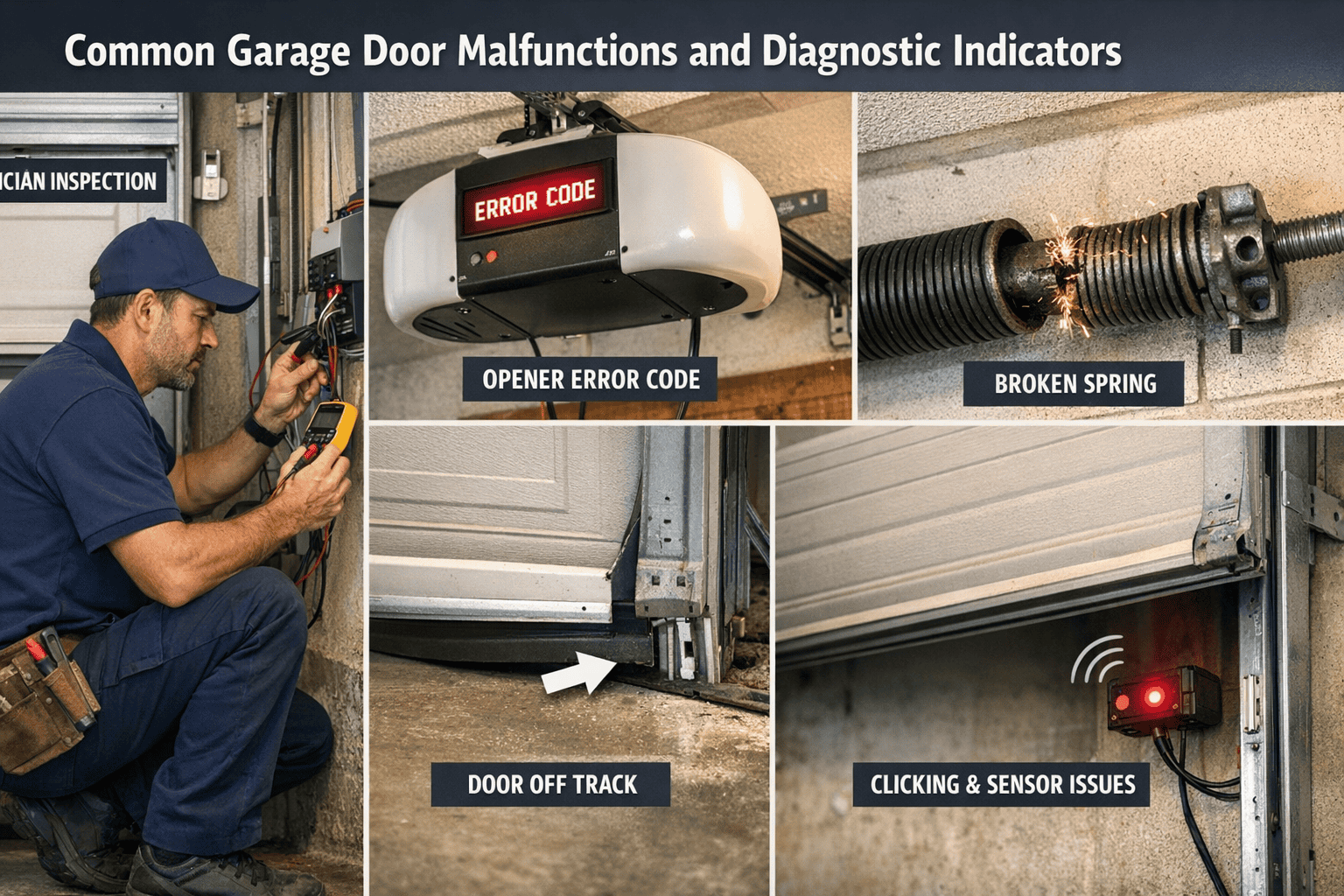
Garage door problems manifest through various observable symptoms that indicate specific component failures. A broken spring represents the most frequent garage door malfunction, typically occurring suddenly with an audible bang. When torsion spring failure occurs, the door becomes impossibly heavy to lift manually, and automatic opener systems may strain audibly or refuse to operate, protecting the garage door motor from damage.
Why Does a Garage Door Won’t Close Completely or Reverses Before Touching the Floor?
Closure failures typically result from sensor alignment issues or force settings requiring adjustment. When garage door sensor problems occur, the photo eye system detects false obstructions, causing the automatic reverse mechanism to engage prematurely. Sensor alignment involves ensuring both infrared sensors face each other precisely, typically indicated by solid LED lights rather than blinking indicators. Additionally, limit settings and travel limits programmed into the opener’s circuit board must be calibrated correctly to establish proper door travel distances.
What Causes Noisy Door Operation and Grinding Sounds?
Excessive noise during operation indicates several potential issues. Worn rollers, particularly steel rollers without adequate bearing protection, generate grinding or squeaking sounds as metal contacts metal within the garage door track. Inadequate lubrication exacerbates these sounds, as garage door lubricant provides essential friction reduction for hinges, rollers, springs, and bearing surfaces. A noisy door may also indicate loose hardware, worn belt drive opener components in belt drive systems, or chain drive opener deterioration in chain drive configurations.
Professional Garage Door Repair Procedures and Service Protocols
Professional garage door technicians follow systematic diagnostic and repair protocols to address malfunctions safely and effectively. A comprehensive safety inspection initiates every service call, evaluating all critical components for wear, damage, or misalignment. This diagnostic fee typically covers the inspection time and provides customers with detailed cost estimates for necessary repairs.
Spring replacement represents one of the most hazardous and frequently required repairs. Torsion spring replacement requires specialized tools and expertise, as these components store tremendous mechanical energy. Licensed contractors calculate proper spring specifications based on door weight, height, and cycle life requirements, ensuring appropriate spring tension for balanced operation. Extension spring repair similarly demands careful attention to safety cable installation, which prevents spring whipping if failure occurs during door operation.
How Do Technicians Perform Track Alignment and Cable Replacement?
Track repair addresses bent track conditions or misaligned track sections that prevent smooth roller travel. Garage door track alignment involves loosening mounting brackets, repositioning tracks to manufacturer specifications, and verifying plumb and level measurements throughout the assembly. Severe track damage may necessitate complete section replacement rather than adjustment.
Cable replacement becomes necessary when frayed cable conditions develop or complete cable failure occurs. The garage door cable came off drum scenarios require immediate professional attention, as manual operation becomes dangerous and further component damage may result. Technicians release spring tension safely before removing damaged cables and installing replacement components with proper drum winding and tension restoration.
Garage Door Opener Systems: Installation, Repair, and Technology Options
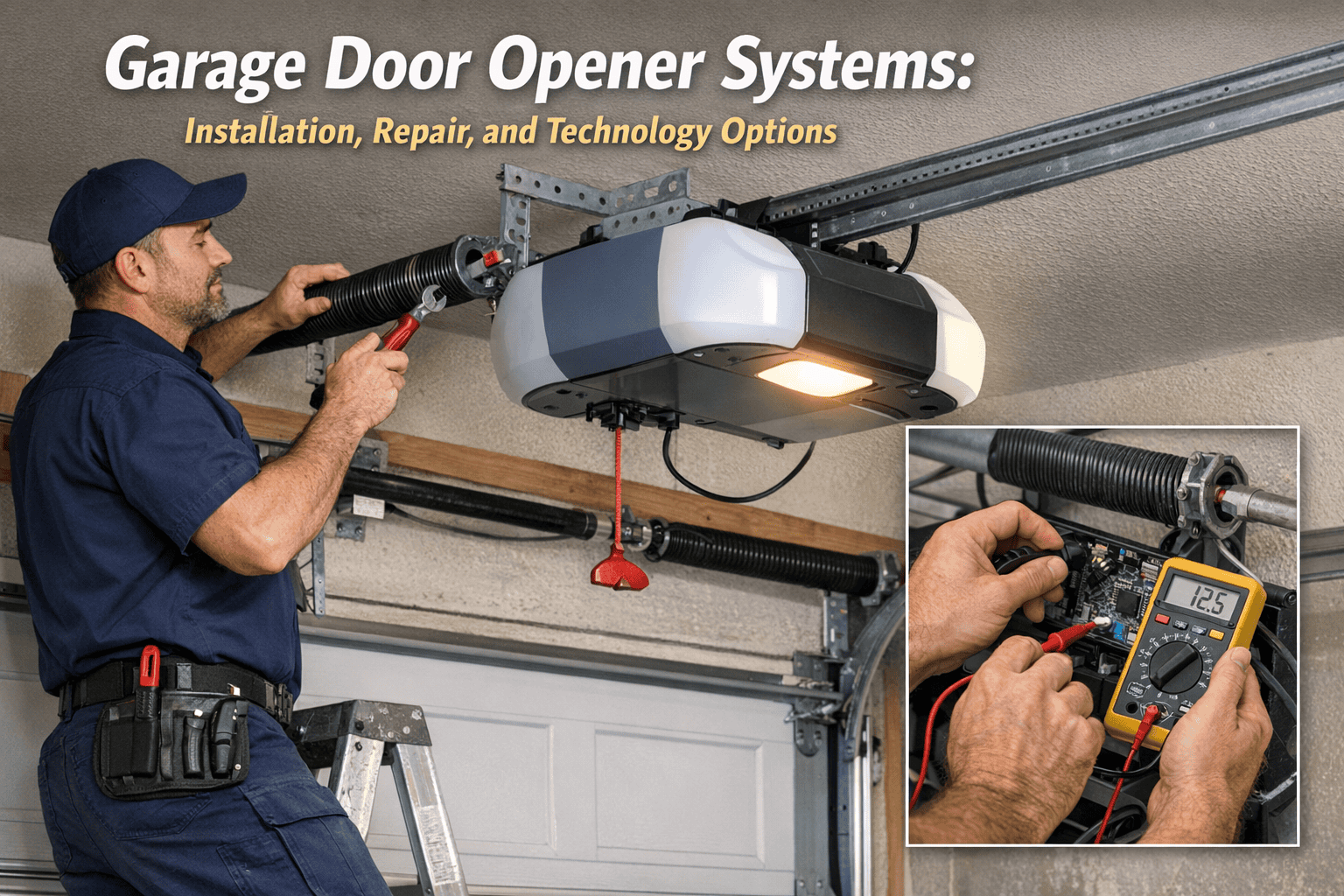
The garage door opener serves as the automation heart of modern systems, with various drive mechanisms and technology features available. Chain drive opener systems represent the most economical option, utilizing metal chains to transfer motor power to the door carriage. Belt drive opener configurations provide quieter operation through reinforced rubber belts, while screw drive opener systems feature rotating threaded rods for drive power transfer.
Opener installation requires precise alignment, proper mounting, and careful adjustment of force settings that determine operational power levels. Excessive force can damage door components or create safety hazards, while insufficient force prevents complete door travel. Professional installers calibrate these parameters alongside limit switch adjustment, establishing exact opening and closing positions.
| Opener Type | Horsepower Rating | Noise Level | Maintenance Requirements | Typical Cost Range |
|---|---|---|---|---|
| Chain Drive Opener | ½ to ¾ HP | Moderate to High | Annual lubrication | $150-$300 |
| Belt Drive Opener | ½ to ¾ HP | Low | Minimal maintenance | $200-$400 |
| Screw Drive Opener | ½ to ¾ HP | Moderate | Periodic lubrication | $175-$350 |
| Smart Garage Door Opener | ½ to 1¼ HP | Low | Firmware updates | $300-$600 |
Contemporary opener troubleshooting addresses both mechanical and electronic issues. Circuit board replacement becomes necessary when logic control failures prevent operation or cause erratic behavior. Remote programming and keypad installation require synchronization with the opener’s receiver system, with universal remote options available for compatibility with multiple door systems. Battery replacement in remote control and keypad entry devices represents routine maintenance, while more complex issues may require professional diagnostic service.
Preventive Maintenance Service and Safety Inspection Protocols
Regular maintenance service extends component lifespan and prevents unexpected failures. A comprehensive garage door tune up includes systematic inspection, adjustment, and lubrication of all mechanical components. Professional maintenance checklist items include:
- Visual inspection of springs, cables, rollers, hinges, and tracks for wear or damage
- Lubrication service applying appropriate garage door lubricant to all moving parts
- Door balance testing to verify proper spring tension and counterbalance function
- Safety sensor testing to confirm photo eye alignment and auto-reverse functionality
- Hardware tightening to secure loose bolts, nuts, and mounting brackets
- Weather stripping inspection and bottom seal assessment for environmental protection
- Opener force adjustment verification to ensure proper operational parameters
- Emergency release testing to confirm manual operation capability during power failures
Annual inspection by insured technicians identifies developing issues before complete component failure occurs. This preventive approach significantly reduces emergency repair requirements and extends overall door lifespan. Spring life expectancy typically ranges from 10,000 to 15,000 cycles for residential applications, translating to approximately seven to nine years for average usage patterns. Commercial garage door systems experience higher cycle rates, necessitating more frequent inspection intervals and accelerated parts replacement schedules.
Material-Specific Repair Considerations for Different Door Types
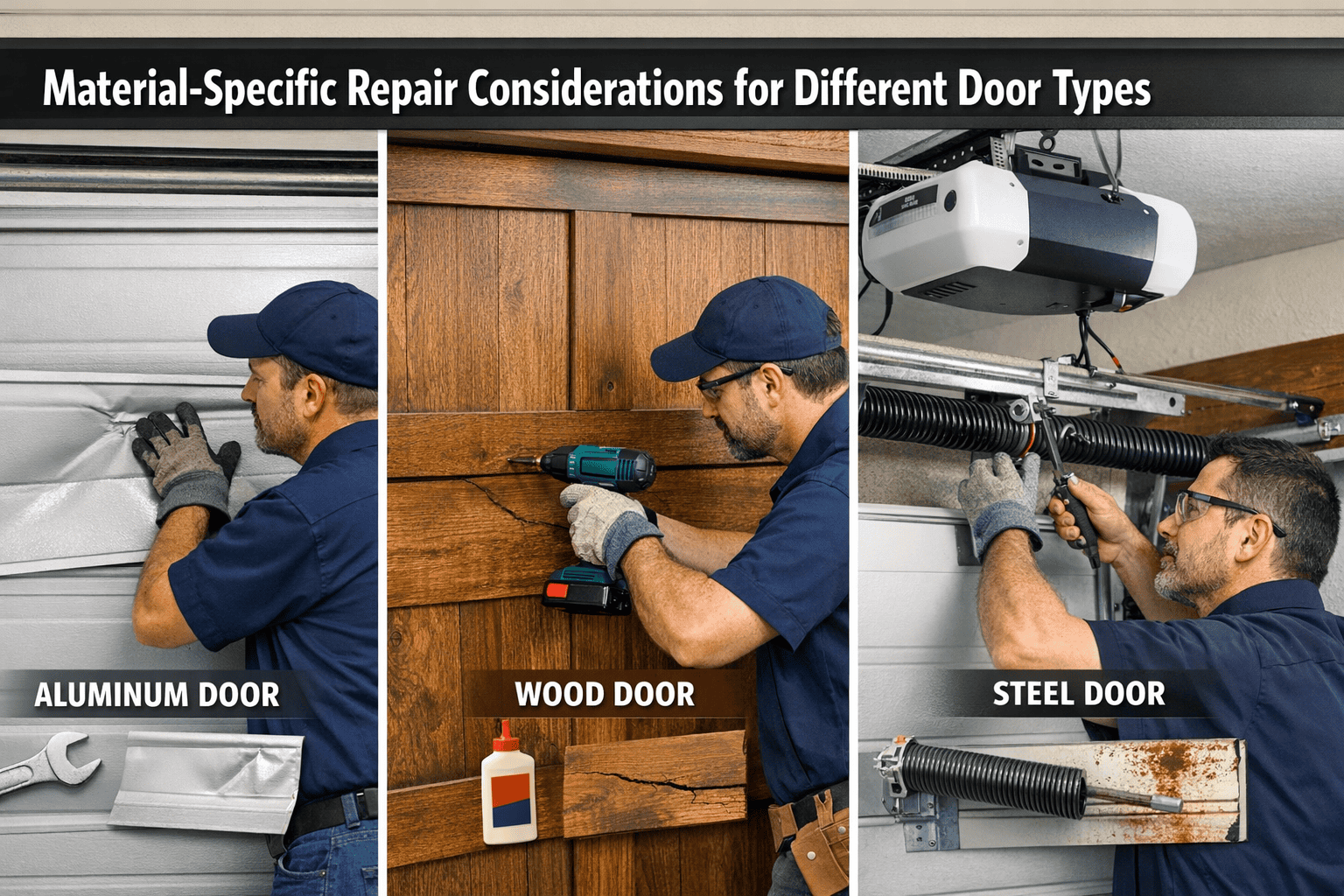
Garage door construction materials influence repair approaches and maintenance requirements. Steel door panels represent the most common residential garage door material, offering durability and relatively simple panel replacement when damage occurs. Steel garage door repair typically addresses dent removal, rust treatment, or complete panel substitution for severe impact damage.
Wood door systems require specialized care, with wooden garage door repair addressing moisture damage, warping, and finish deterioration. These natural material doors demand regular sealing and painting maintenance to prevent rot and structural degradation. Aluminum door construction provides lightweight operation with minimal maintenance requirements, though aluminum garage door repair frequently addresses cosmetic dent damage due to the material’s relative softness.
Insulated door systems feature layered construction with foam core materials enhancing thermal efficiency. These doors require careful handling during roller replacement or hinge replacement to prevent delamination of the insulated sandwich structure. Fiberglass door panels resist corrosion in coastal environments but may crack under impact, necessitating complete panel replacement rather than repair.
Cost Considerations and Repair Versus Replacement Decisions
Understanding garage door repair cost factors enables informed decision-making regarding maintenance investments. Labor costs vary by geographic region and service provider qualifications, with diagnostic fees typically ranging from $75 to $150. Common repair costs include:
- Spring replacement cost: $150-$350 for residential torsion spring systems
- Garage door opener repair cost: $100-$250 for circuit board or gear replacement
- Cable replacement: $150-$200 including both cables
- Roller replacement: $150-$300 for complete roller set installation
- Sensor alignment: $75-$150 for diagnostic and adjustment service
- Panel replacement cost: $250-$800 depending on material and door design
The repair versus replacement decision considers multiple factors including door age, cumulative repair expenses, and overall system condition. When repair costs approach 50% of garage door replacement cost, and the door exceeds 15-20 years of age, complete system replacement often provides superior long-term value. New installations offer updated safety features, improved energy efficiency through better insulated door designs, and warranty coverage protecting the investment.
Selecting Professional Service Providers and Verifying Qualifications
Choosing qualified garage door contractors ensures safe, effective repairs with appropriate warranty coverage. Licensed contractor status verifies business legitimacy and regulatory compliance, while insured technician credentials protect property owners from liability during service delivery. Certification programs offered by major manufacturers including Chamberlain, LiftMaster, Genie, Craftsman, and Overhead Door demonstrate technical proficiency with specific product lines.
What Should Customers Expect from Same Day Service and Emergency Repair Providers?
Emergency garage door repair service addresses urgent situations including broken springs, off track door conditions, or complete opener failures preventing vehicle access. Same day repair capabilities require adequate parts inventory and technician availability, with service guarantees defining response timeframes and completion commitments. Reputable local repair companies maintain transparent pricing structures with published labor costs and parts replacement fees, avoiding surprise charges during service delivery.
Customer reviews provide valuable insights regarding service quality, professionalism, and reliability. The best garage door repair companies demonstrate consistent positive feedback addressing technical competence, communication clarity, and respect for customer property. Service guarantee terms should clearly define warranty coverage periods for both parts and labor, with reputable providers standing behind their workmanship.
Frequently Asked Questions
How much does garage door spring replacement cost?
Garage door spring replacement cost typically ranges from $150 to $350 for residential torsion spring systems, including parts and labor. Extension spring replacement generally costs slightly less, from $125 to $250 for both springs. The final price depends on door size, spring quality, geographic location, and whether emergency service is required. Professional installation ensures proper spring tension calibration and includes safety inspection of cables, drums, and related hardware.
Why does my garage door open but won’t close completely?
A garage door that opens but won’t close typically indicates safety sensor problems, incorrect limit settings, or obstruction detection issues. The photo eye sensors positioned near the floor must maintain proper alignment and clear sight lines to allow closure. Limit switch adjustment may be necessary to establish correct closed position parameters. Additionally, force settings on the opener may require calibration if the door reverses before touching the floor. Professional sensor alignment service resolves most closure issues quickly.
Can I repair a garage door spring myself or should I hire a professional?
DIY repair of garage door springs, particularly torsion springs, presents significant safety hazards and is strongly discouraged. Torsion springs store extreme mechanical energy capable of causing severe injury or death if released improperly during amateur repair attempts. Professional technicians possess specialized tools, training, and experience to safely release spring tension, calculate proper spring specifications, and install replacement components with correct torque settings. The modest cost of professional spring replacement service provides essential safety protection worth the investment.
How often should I schedule garage door maintenance service?
Annual garage door maintenance service represents the recommended frequency for residential systems under normal usage conditions. This preventive maintenance includes comprehensive safety inspection, lubrication service, door balance testing, hardware tightening, and sensor verification. Commercial garage door systems with higher cycle rates may require semi-annual or quarterly inspection intervals. Regular maintenance extends component lifespan, identifies developing issues before complete failure, and ensures continued safe operation of all safety features.
What is the average lifespan of a garage door and its components?
A well-maintained garage door system typically lasts 15-30 years, though individual components have varying lifespans. Torsion springs generally provide 10,000-15,000 cycles (7-9 years), extension springs last slightly less, and garage door openers function effectively for 10-15 years. Rollers require replacement every 5-7 years depending on material quality, while steel or aluminum door panels may last the system’s entire lifespan unless damaged. Wood doors require more frequent maintenance and may need replacement after 15-20 years due to environmental deterioration. Regular maintenance service significantly extends these lifespan expectations.
How do I know if I need garage door track alignment or complete track replacement?
Track alignment suffices when tracks show minor misalignment without structural damage, typically indicated by a door that operates with binding, uneven movement, or occasional derailment. Bent track conditions require assessment of damage severity—minor bends often allow realignment, while severe crimps, cracks, or multiple damaged sections necessitate track replacement. An off track door condition requires immediate professional attention regardless of cause. Licensed technicians evaluate track integrity, measure alignment specifications, and recommend appropriate repair procedures based on damage extent and cost-effectiveness considerations.
